
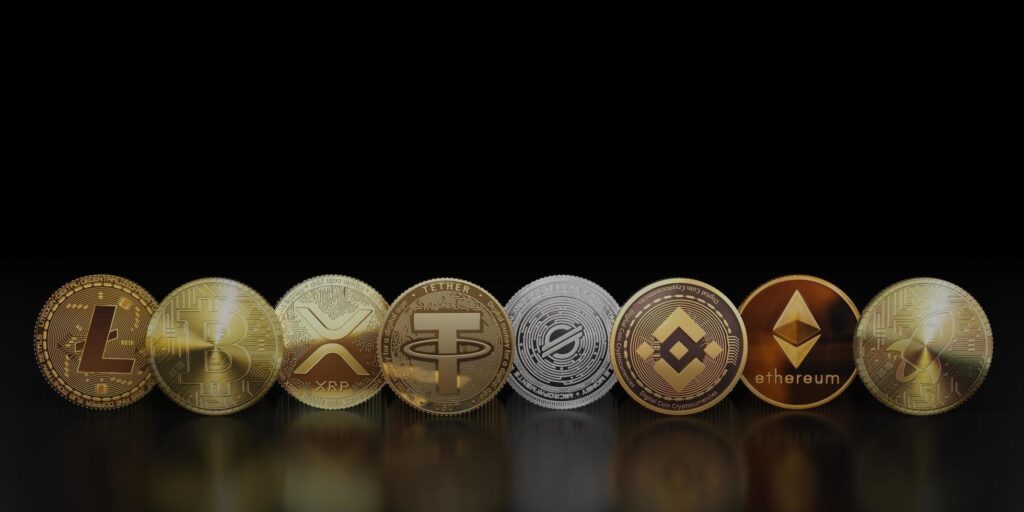
Cryptocurrencies have come a long way since their inception over a decade ago. The cryptocurrency definition consists of two words: crypto, which refers to the cryptographic technology that safeguards transactions, and currency, a medium of exchange. Together, they are a new digital order that has transformed the world we live in. For many people, Bitcoin is the cream of the crop, thanks to its market share dominance. However, there’s a wide universe of digital assets out there at the moment, though many of them are niche coins with very limited value.
Others, however, shine just as bright as Bitcoin. Ethereum, for example, is an irreplaceable token used to facilitate transactions on the Ethereum network. Basically, Ethereum is a multipurpose tool that supports various “apps” and lets developers create new forms of value, which is what makes it one of the most versatile technologies in this industry. Then there’s also Tether, belonging to the category of stablecoins, tied to a fiat currency ( the U.S. dollar in this case), which combines the benefits of crypto with the stability of a currency that a sovereign government issues. These two digital currencies are, in fact, among the most popular, with the eth usdt trading pair being one of the most widely traded in the market, showing how much one Ethereum is worth in Tether and serving as a hedge against volatility for market participants. If you’re interested in cryptocurrencies, you need to first understand the different types available and how they differ from one another. So, let’s dive in, shall we?
Bitcoin: The King of Cryptocurrency
There’s likely no need to introduce Bitcoin, because everyone who’s heard about crypto knows it very well. It’s basically the digital currency that introduced the world to digital money, and was designed as a peer-to-peer, decentralized network to enable people to send money around the world and operate outside the traditional banking system guardrails. To date, it remains the most popular cryptocurrency, and many view it as a form of digital gold, a store of value, and a reliable investment. Many merchants and service providers worldwide also accept it as a form of payment.
1. Altcoins: The Alternatives
An altcoin is technically any cryptocurrency other than Bitcoin, and this category came on the scene in 2011 with the emergence of Litecoin, which became known as “digital silver”, and had the purpose of improving upon certain aspects of Bitcoin. Many other altcoins have been created after Litecoin; however, each has a unique purpose, filling an existing niche or gap. Listing every one of them would read like a novel, so we won’t be covering all of them here, but an altcoin that’s definitely worth mentioning is Ethereum, which is, in fact, the 2nd most popular cryptocurrency, and a second-generation blockchain tech created to expand use cases in the crypto ecosystem. Compared to Bitcoin, it isn’t used for P2P payments but also supports more complex transactions, and it requires a shorter block time.
2. Stablecoins: The Pegged Assets
The prices of cryptocurrencies can fluctuate very quickly, but stablecoins operate differently. They are designed to maintain a constant value relative to the U.S. dollar. This is achieved by holding a reserve of physical assets, such as gold and dollars, equal to the amount in circulation. Given their nature, they offer a great way to enter the crypto market with ease and, most of all, with peace of mind, and to explore the deeper reaches of the ecosystem through swapping.
3. Utility Tokens: Powering Ecosystem Functionality
Utility tokens have specific functions within their respective blockchain ecosystems, allowing holders to access features such as earning crypto rewards. They also support blockchain networks by providing compensation for processing network services, including transactions, and are used as a means of exchange for goods and services. Utility tokens gain value over time as demand increases, driven by the success or growth of the ecosystem they are associated with. As more individuals join the ecosystem and engage in its activities, demand for these tokens increases, driving up their value. An example of a well-known utility token is Render, which leverages distributed GPU power to render motion graphics, high-quality animation, and VFX at lower costs and quicker speeds.
4. Security Tokens: Representing Ownership
Also known as equity tokens, these tokens represent ownership of an asset (or a portion of it) on the blockchain. Any real-world asset can be tokenized using blockchain technology, and the resulting tokens confer ownership among holders. You can think of them as the equivalent of trading stocks in the crypto world, where a portion of a company (the asset) is split into slices (shares), which are then available for investors to purchase. As with stock trading, security tokens must be registered with the SEC.
5. DeFi Tokens: Recreating TradFi in a Decentralized Way
DeFi represents one of the most popular innovations in blockchain and crypto, providing users with a comprehensive range of services, including loans, lending, and insurance, all governed by automated smart contracts. In other words, there’s no involvement from legacy institutional providers, even when it comes to high-value transactions with participants who are basically strangers. Most DeFi protocols issue their own tokens, giving holders access to the services we mentioned, which are available on their network. Some examples of DeFi tokens include UNI, DAI, and LINK.
6. Non-Fungible Tokens: Providing Verifiable Proof of Ownership
Remember the NFT mania from 2021 when CryptoPunks were all the rage online? However, beyond the hype, non-fungible tokens have underlying technology with valid use cases. When you mint an NFT, a digital file is imbued with a unique hash (a fingerprint), a symbol, and a token name, and this one-of-a-kind asset can be stored on the digital ledger or sold or traded at the owner’s discretion. Basically, there’s complete freedom to decide what to do with it further. Moreover, the permanent record on the blockchain will always determine the true and rightful owner, and compared to other cryptocurrencies, NFTs cannot be exchanged 1-for-1 because they are, as the name suggests, non-fungible.
The Bottom Line
From the outside, crypto may seem a monolith, but in reality, the crypto world is made up of numerous assets with unique functions, inner workings, and communities. It’s a multiverse of services, projects, and investment opportunities worth looking into, so hopefully, now that you have a better understanding of the different types of digital currencies, you’ll feel more confident venturing out beyond Bitcoin.